
How to Replace Fish Meal in Piglet Diets Without Compromising Performance
By Marisabel Caballero, Category Manager Monogastrics, Hamlet Protein
For decades, fishmeal has been regarded as a benchmark protein source for nursery pig diets. It earned this reputation because it provides a balanced protein with high digestibility and palatability. It is mainly used at weaning, a critical period when piglets are highly susceptible to any stressors.
However, limited supplies, high prices, and unstable fish meal quality are factors that nutritionists are concerned about when evaluating the use of this ingredient in current and future piglet diets.
To replace fishmeal, nutritionists must look for the best nutritional quality. By using novel indicators such as the fast-protein-to-resistant-protein ratio, nutritionists can compare the protein efficiency of different protein sources. HP 300 by Hamlet Protein has demonstrated its potential as a fish meal replacer in piglet diets.
Why Crude Protein Doesn't Tell the Whole Story
In practical feed formulation, protein evaluation has traditionally focused on two primary criteria:
- Crude protein (CP) content
- Standardized ileal digestibility (SID) of amino acids (AA)
While these parameters are essential, they are not sufficient to fully characterize the biological and functional effects of protein in piglet diets. Protein evaluation is increasingly moving beyond crude protein and amino acid digestibility to include digestion kinetics and physiological functionality. As piglets respond to the amino acids that are absorbed, not to the protein present in the feed, the rate and extent of protein digestion become critical determinants of ingredient quality.
What Are Fast, Slow and Resistant Proteins?
From a nutritional perspective, functional fractions of protein need to be considered (Table 1):
- Fast Protein: Referring to soluble or easily hydrolyzed proteins. Fast protein is absorbed in the proximal small intestine and represents an efficient AA source.
- Slow Protein: Consists of structurally complex proteins, which require extensive enzymatic breakdown. In fresh-weaned piglets, with limited digestion capacity, slow protein may remain largely undigested.
- Resistant Protein: All proteins passing the distal ileum are considered undigestible; for instance, heat-damaged proteins, proteins associated with antinutritional factors, and undesirable non-protein nitrogen compounds. In the hindgut, these proteins are substrates for fermentation, promoting the production of toxic metabolites, such as ammonia.
The post-catch handling and processing of fish meal causes changes in proteins, leading to the formation of biogenic amines, total volatile basic nitrogen (TVB-N), trimethylamine (TMA), dimethylamine (DMA), and ammonia, all of which have been associated with reduced ingredient quality and may contribute to intestinal inflammation and poorer gut health.
How to Evaluate Fish Meal Alternatives for Piglets
Soybean meal (SBM) is the most used plant protein in animal nutrition, but anti-nutritional factors (ANFs) limit its utilization by young animals. Processing techniques have made it possible to offer the nutritional benefits of high-value proteins and more with SBM as the raw material. The main processing routes include heat and pressure application, microbial fermentation, enzyme treatment, solvent extraction, and acid extraction. Among these technologies, enzymatic treatment has proven particularly effective at reducing antinutritional factors while partially hydrolyzing storage proteins into smaller peptides. HP 300 is produced using a patented enzymatic process that consistently achieves both objectives.
Key Takeaways
- Fish meal is a benchmark protein source in nursery pig diets.
- Price volatility and supply concerns are driving demand for fish meal alternatives.
- Protein quality should be evaluated using more than crude protein and ileal digestibility.
- The Fast Protein : Resistant Protein is proposed as an additional parameter to asses protein functionality.
- Enzyme-treated soy proteins can help maintain piglet performance while reducing reliance on fish meal.
- Faster protein digestion supports gut health and reduces post-weaning challenges.

How Does HP 300 Compare with Fish Meal?
The (pig) digestible sum of amino acids of HP 300 (Hamlet Protein's enzyme-treated soy-specialty) is approximately 20% higher than that of conventional soybean meal and only about 3% lower than that of high-quality fish meal. While fish meal has higher concentrations of digestible lysine and methionine, nutritionists can complement HP 300's fast protein-bound amino acids with crystalline lysine and methionine to achieve both an optimal amino acid profile and favorable protein-digestion kinetics in fish meal-reduced or fish meal-free diets.
Then, as the nutritional value of the protein ingredient is determined not only by its SID amino acid composition, but also by how efficiently those amino acids are released and absorbed, the next level of ingredient evaluation takes us to protein kinetics.
Why Fast Protein May Be a Better Protein Quality Indicator Than Crude Protein
Although fish meals typically contain more crude protein than HP 300 (60-65% vs. 56%), the practical nutritional advantage is much smaller than it appears. On a digestible basis, 100 g of high-quality fish meal provides approximately 57 g of digestible protein compared with 52 g from HP 300—a difference of just 5 g. More importantly, the additional protein in fish meal is accompanied by almost twice the resistant protein, which is not absorbed in the small intestine. Conversely, HP 300 delivers 8.7 g more rapidly digestible ("fast") protein per 100 g of ingredient, due to its much higher fast-protein fraction (83% vs. 63%). This suggests that protein digestion kinetics, rather than crude protein or even digestibility, may provide a more meaningful measure of ingredient quality for nursery pig diets.
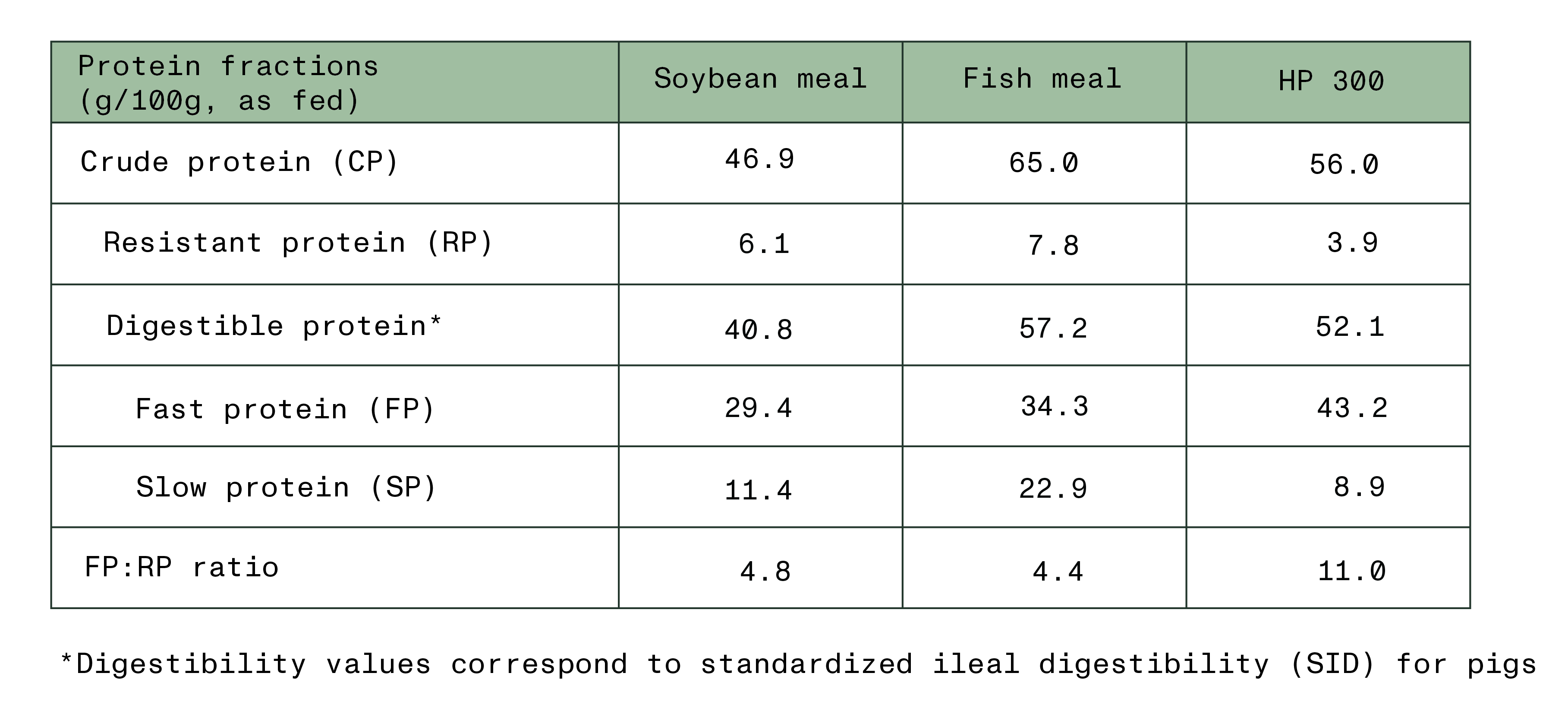
Table 1: Fast-protein to resistant-protein ratios and protein fractions of soybean meal, fish meal (65%), and HP 300 (Hamlet Protein)
Furthermore, the variability in nutritional composition, including fast protein, is higher for fishmeal, larger than 7% in comparison to 1.5% in HP 300.
What Is the Fast Protein : Resistant Protein (FP:RP) Ratio?
Traditional evaluation systems measure how much protein is present and how much is digestible. However, they do not distinguish between protein that is rapidly absorbed and protein that reaches the hindgut. The FP:RP ratio is proposed as a simple functional index describing the balance between protein that nourishes the piglet and protein that potentially nourishes pathogenic bacteria.
The fast protein-to-resistant-protein ratio (FP:RP) could serve as a practical indicator of the quality of protein-rich ingredients. When an ingredient delivers much more rapidly available protein while leaving much less substrate available for hindgut fermentation -a higher ratio-, we can state that this protein functions more efficiently in the animal.
Can Piglet Performance Be Maintained Without Fish Meal?
When HP 300 partially or completely substitutes fish meal, gut health can be maintained or improved. It is possible to reduce the content of resistant protein in the diet, lowering the risk of post-weaning diarrhea.
At the same time, the improved digestion kinetics of HP 300 translate into measurable biological responses. (Figure 1) illustrates how, across 4 independent studies, piglets fed HP 300 consumed more feed, grew faster, and converted feed more efficiently during the critical first weeks after weaning. These early improvements persisted throughout the nursery period, supporting the concept that rapidly digestible protein can enhance nutrient utilization and promote sustained growth.
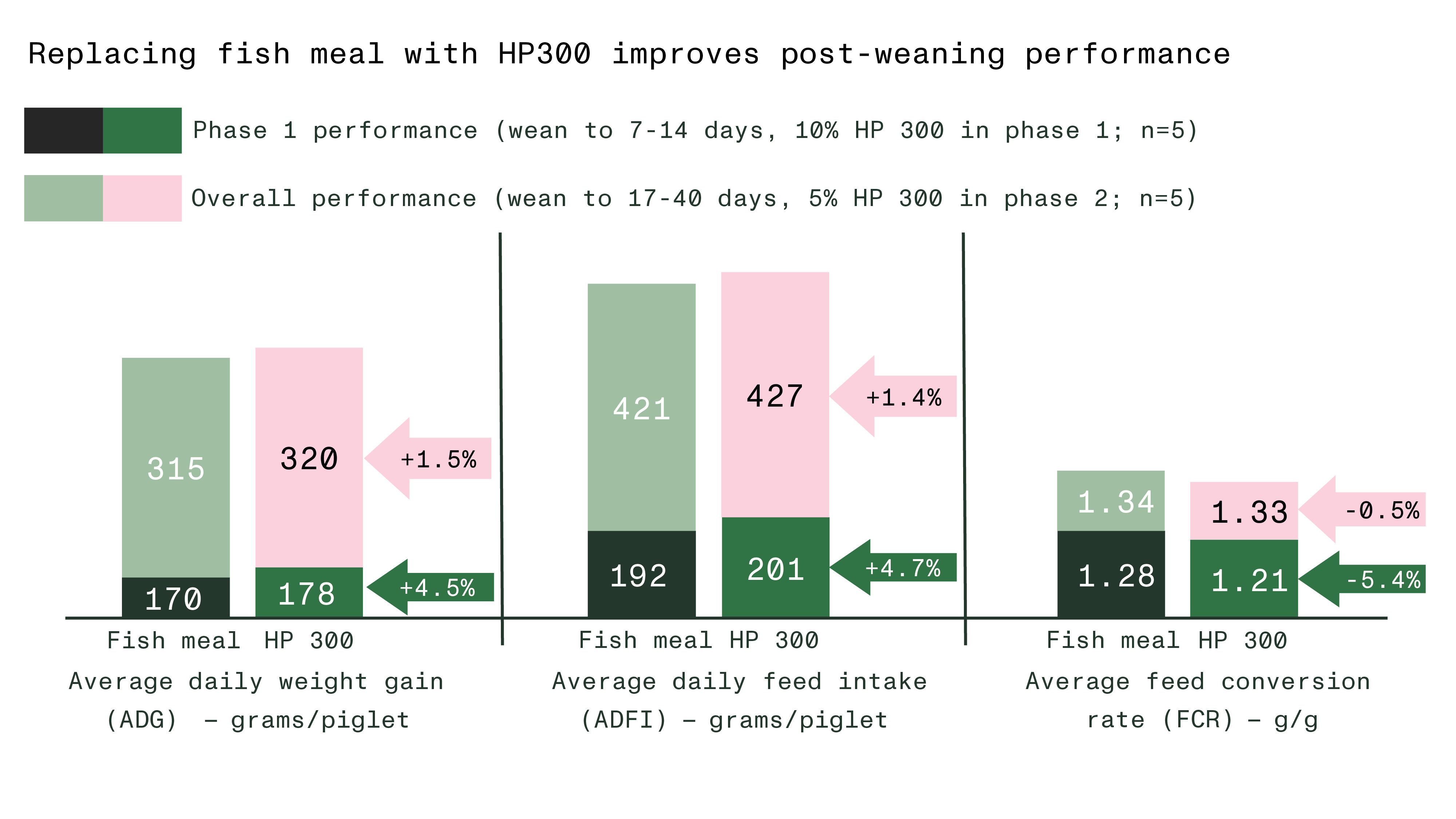
Figure 1: Performance of piglets, fed with fish meal vs HP 300, from weaning to phase 2.
Moreover, results and practical experience over more than 25 years show that it is possible to achieve this performance consistently while reducing diet costs.
The Future of Protein Evaluation in Piglet Nutrition
As protein nutrition continues to evolve, evaluating ingredients solely by crude protein or amino acid digestibility may no longer be sufficient. Incorporating protein digestion kinetics—and ultimately the balance between rapidly digestible and resistant protein—offers a more functional approach to ingredient evaluation. Rather than asking how to replace fish meal, we need to consider how to provide piglets with the protein functionality they require during the critical post-weaning period.
Looking to Reduce Fish Meal in Piglet Diets?
Discover how HP 300 helps nutritionists maintain performance, support gut health, and optimize protein utilization during the post-weaning period.
Frequently Asked Questions About Fish Meal Replacement in Piglet Diets
Why is fish meal used in nursery pig diets?
Fish meal has traditionally been valued for its digestibility, palatability, and balanced amino acid profile during the critical post-weaning period.
Why are producers looking for fish meal alternatives?
Fish meal supply, cost, and quality variability continue to challenge feed formulation and encourage the evaluation of alternative protein sources.
Can soybean protein replace fish meal in piglet diets?
Specially processed soybean proteins can help provide highly digestible protein while reducing antinutritional factors, making them suitable for nursery pig nutrition.
What is the Fast Protein : Resistant Protein ratio?
The FP:RP ratio measures the balance between rapidly digestible protein and protein that escapes digestion, offering a more functional view of protein quality.
Why is resistant protein a concern for piglets?
Protein reaching the hindgut may contribute to fermentation and the production of undesirable metabolites, potentially impacting gut health.
Can reducing fish meal affect piglet performance?
Results from multiple studies show that piglets fed HP300, substituting fish meal, achieved strong feed intake, growth, and feed efficiency during the nursery period.
How can nutritionists support gut health after weaning?
Reducing resistant protein and improving protein digestion kinetics supports gut health and nutrient utilization during the post-weaning period.
About HAMLET PROTEIN
