
Protein Matters: Optimizing piglet nutrition during critical periods
By Marisabel Caballero, Category Manager Monogastrics, originally published in Milling and Grain Magazine, Volume 137, Issue 3
Weaning is a critical period for piglets: The diet changes from highly digestible sow milk to solid feed, including plant-based ingredients. The digestive system is still immature, enzyme secretion is poor, the intestinal barrier is fragile, and the microbiota is unstable. In this phase, what is not digested can be as important as what is.
More protein is not necessarily better
Piglets need amino acids to build tissue, support immunity, and maintain gut integrity. But the young piglet cannot fully digest large amounts of protein. The fraction that escapes digestion reaches the hindgut, where bacteria ferment it, producing compounds such as ammonia, amines, phenols, and indoles, which irritate the intestinal lining, increase inflammation, impair water and electrolyte absorption, and favor the proliferation of pathogens.
The visible outcome is familiar: post-weaning diarrhea and impaired performance.
The real objective: clean, fast protein
What makes good piglet feed is not a high percentage of crude protein; amino acid digestibility is important; however, an outstanding piglet feed is a balanced diet that contains clean protein of fast digestion and efficient absorption, which is thus effectively converted into body tissue.
Clean protein
Soybean meal remains the backbone of protein supply in animal production because of its amino acid profile, availability, and cost efficiency.
However, for young piglets, SBM also brings anti-nutritional factors (ANFs) that can limit performance, compromise gut health, and increase the risk of post-weaning diarrhea. The most important ones are trypsin inhibitors (TI), β-conglycinin, and galacto-oligosaccharides (GOS).
In summary, TI bind to trypsin and chymotrypsin reducing their activity and protein digestion, allowing more intact protein to pass into the hindgut, where it becomes substrate for bacterial fermentation. Antigenic proteins like β-conglycinin trigger gut inflammation, which redirects nutrients to the immune system, damages the gut barrier and increases oxidative stress and the risk of diarrhea. GOS – raffinose and stachyose – cannot be digested by pigs as they lack the necessary enzymes; in consequence, they constitute an additional challenge factor in the gut when protein digestibility is already compromised.
Fast protein
The hindgut is an ecosystem in which microorganisms compete to utilize protein, fiber, and starch. The main substrate they will get depends on digestion in the foregut: if protein is absorbed early, carbohydrates and fiber become the dominant substrate for fermentation, which, in most cases, is beneficial. If a large quantity of protein enters the hindgut, it becomes the major substrate, favoring the growth of pathogens. Evidence of this can be quantified in productivity and gut health.
Figures 1 and 2 show productivity and gut health improvements relative to groups in which SBM is partially replaced with a specialty soy protein (HP ESBM). Five recent trials, by Hamlet Protein, are summarized in the figures and show how this dietary substitution leads to higher body weight gain, lower feed conversion, and better gut health. Furthermore, the HP-ESBM groups show increased cecum butyric acid, indicative of a beneficial microbial population and adequate gut barrier function.
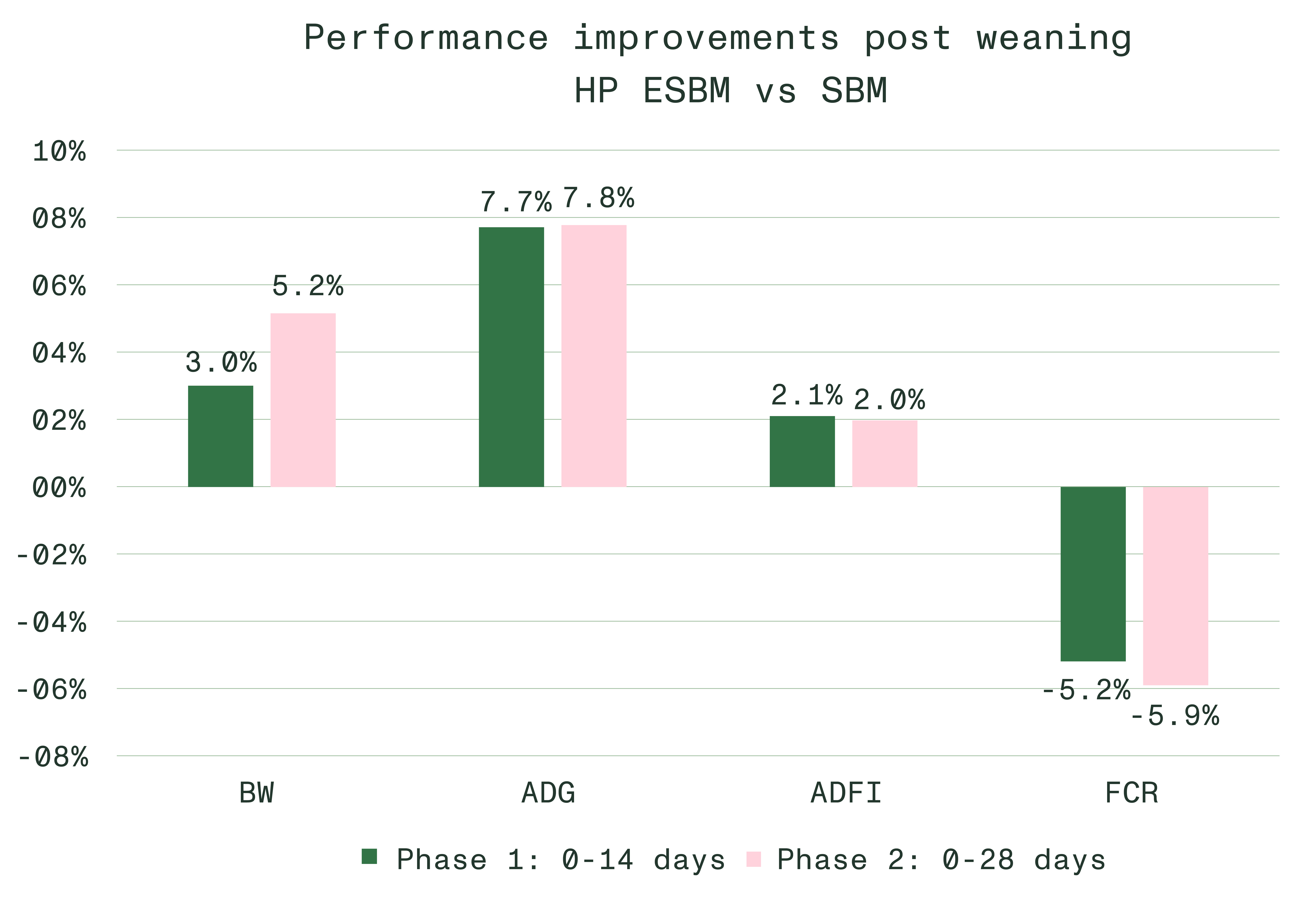
Figure 1: Performance improvements of weaned piglets consuming HP ESBM relative to control groups with a SBM based diet. Summary of 5 recent trials.
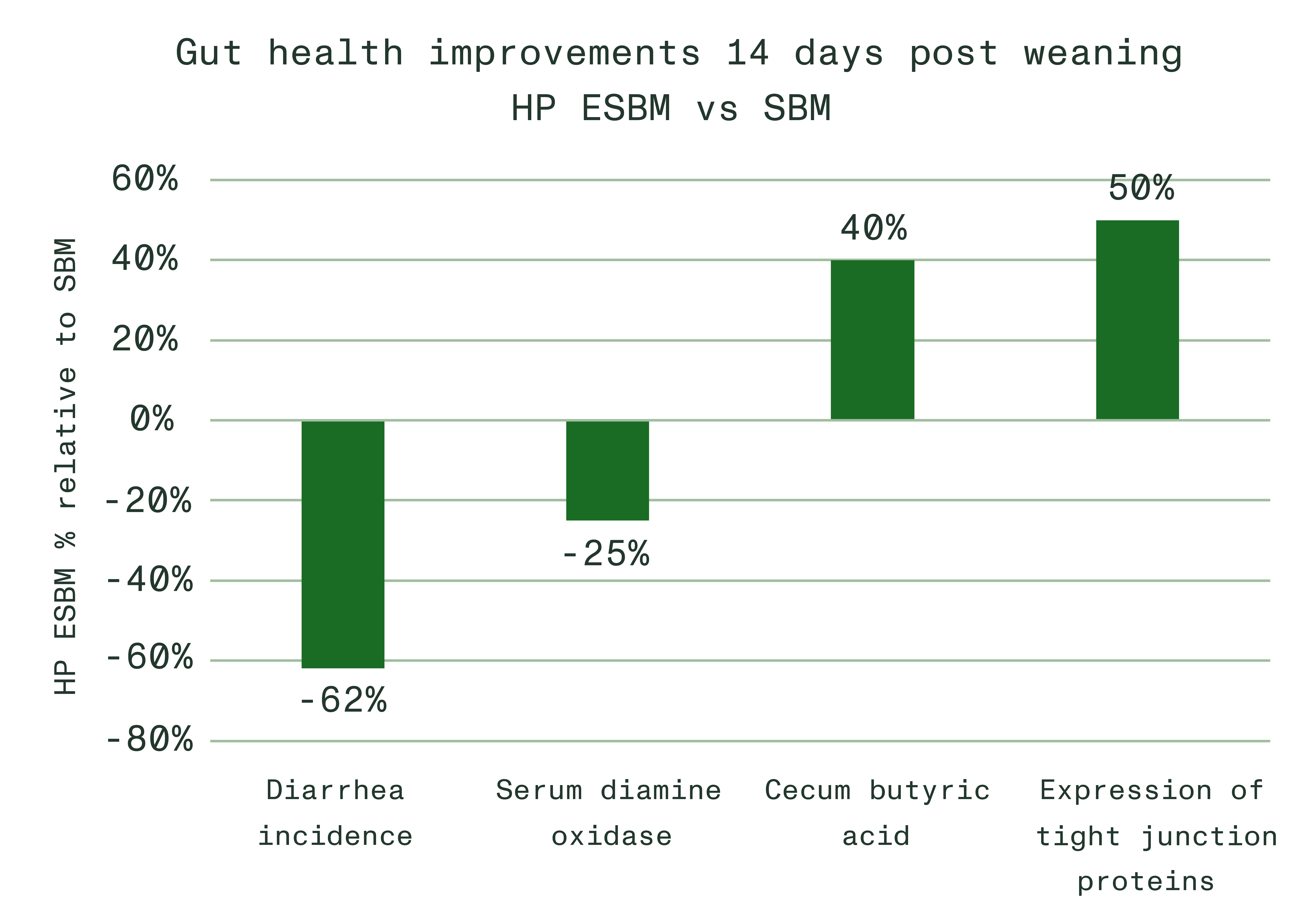
Figure 2: Gut health improvements of weaned piglets consuming HP ESBM relative to control groups with a SBM based diet. Summary of 5 recent trials.
Reducing ANFs and increasing fast protein
Specialty soy proteins for weaned piglets are designed to maximize the fast availability of amino acids while minimizing anti-nutritional factors. The main processing routes include heat and pressure application, microbial fermentation, enzyme treatment, solvent extraction, and acid extraction, however; not all processing reduces all ANFs equally.
- Extruded SBM (ExSBM) is subjected to a high-intensity process, exposed to extreme temperatures, pressure, and mechanical shear. The process can reduce trypsin inhibitors but cannot remove GOS. Proteins are not modified; thus, it doesn’t improve digestion kinetics.
- Soy protein concentrates (SPC) are obtained by extracting soluble sugars from SBM or from defatted soy flakes. The acid or, most commonly, alcohol extraction removes soluble carbohydrates, concentrating the protein. Extraction is followed by heat application and drying; therefore, not only GOS are reduced but also trypsin inhibitors and antigenic proteins. But the proteins in SPC are largely intact, and some can form aggregates, making them slow to digest.
- Fermented SBM (FSBM) is inoculated with bacteria or fungi to reduce ANFs and partially hydrolyze some proteins. The utilization of different microbial strains, fermentation conditions, and drying processes makes this ingredient highly variable. Even when coming from the same manufacturer, batch-to-batch variations due to fluctuating environmental conditions and raw material inconsistencies are common.
- Enzyme-treated SBM (HP ESBM) is subjected to specific enzymes under defined conditions. For instance, Hamlet Protein uses a patented process to obtain products in which ANFs are significantly reduced, and a high fraction of the proteins are broken into small peptides. The controlled processing environment yields a consistent product without significant batch-to-batch variation.
The piglet’s perspective on low protein diets
At their highest critical period, piglets need to develop their feed intake to consume enough nutrients to support growth, with the lowest impact on gut health, while coping with several stressors. For this, low-protein diets have been considered an alternative, which can also deliver balanced amino acids, prioritize rapid digestibility, and minimize protein fermentation.
However, low-protein diets are often associated with slower growth as they may be deficient in non-essential amino acids. Moreover, a higher incidence of ear and tail biting in piglets fed low-protein diets has been observed, resulting from heightened foraging or feeding behaviors.
A practical way to offset the limitations of low-protein diets is the inclusion of crystalline amino acids together with fast, highly available protein sources.
A two-by-two factorial study (Table 1) compared two crude protein levels (16% vs. 19%) and two protein types: a slow source (SPC) and a fast source (HP ESBM). All diets were balanced for digestible amino acids, meaning the low-protein treatments received greater supplementation.
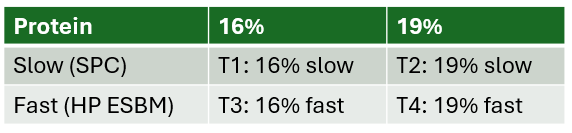
Table 1: 2x2 factorial trial design testing the effects of low and high protein levels with slow and fast sources in weaned piglets
The outcome was clear. Even at the lower protein level, piglets fed the fast protein achieved higher body weight and superior ADWG than animals receiving the slow protein source with the high protein level (Figure 3). This highlights the importance of having peptides and amino acids of fast availability in piglet diets.
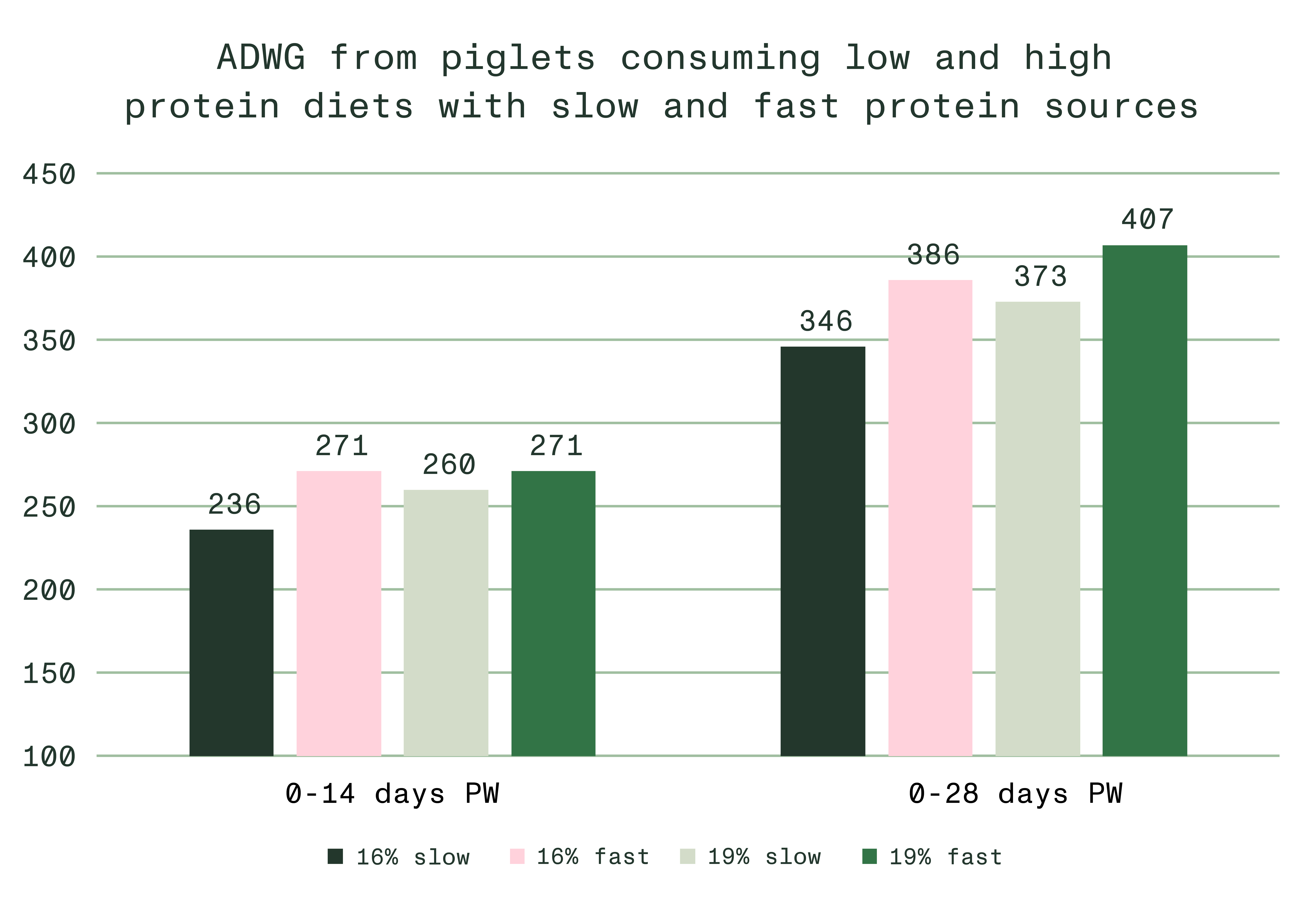
Figure 3: Average daily weight gain of weaned piglets fed diets with low (16%) and high (19%) protein levels using slow and fast protein sources.
The use of fast protein not only allowed the reduction of CP levels without losing performance, but it also allowed better protein utilization: the piglets consuming fast protein showed 22% less fecal nitrogen. When using fast protein, less nitrogen is wasted.
The nutritionist's conclusion
Nutritionists should review protein sources in starter diets not only for digestibility but for speed of absorption and ANF content, adjusting formulations to reduce hindgut fermentation risk.
When feeding weaned piglets, it is necessary to deliver balanced amino acids, prioritize rapid digestibility and utilize highly digestible and clean ingredients to protect the gut while it matures. A good start makes all the difference.
Events with Hamlet Protein
We attend events around the world. Meet us at exhibitions and seminars - we always look forward to welcoming you!
We also sponsor conferences with focus on young animal nutrition.
Have a look below where to meet us next.

About HAMLET PROTEIN
